grow performance
Solutions for when effective performance is on the line.
From organizational development and individual and team coaching to in-company training, GROW helps your people work better together. Because an organization's performance depends on more than the individual abilities and decisions of the people who work there.
Sound familiar?
“Individually, everyone's a pro. Together, we're still slower than we should be.”
“Our salespeople work hard, but the numbers just aren't coming. Nobody knows at which point in the process we're losing the customer.”
“Information doesn't get through within the team. Everyone assumes someone else already knows.”
“We sent them to a training. It was really good. Two weeks later, it was business as usual.”
If this sounds like your team, you're in the right place. Teamwork can be learned, and it's often worth more than perfecting each individual.
How we think
Good development has a lasting positive impact
In our experience, it's no longer enough for in-company training to cover a relevant topic and get it across to teams quickly. Because success isn't measured by whether the training took place, but by whether it delivered positive results that stay with you for the long term.
We think in terms of processes, and we start by reviewing day-to-day operations: not every performance problem is a training issue. The program is then built from participants' real situations, and we involve their managers, because without them new practices fade within a few weeks. Between training days, we keep the learning alive with the Thod learning support system, and we build measurement points into the process so you can see what has changed.
How we help
From one person to the entire organization
Sometimes the system itself needs to change, sometimes the breakthrough comes from developing one or two key people, and sometimes from developing the whole team.
Organizational development consulting
Today's sales results are an increasingly poor predictor of long-term success. Where the problem isn't a training issue, we start with a sales audit: using the GROW 5C Model, we walk through each step of the sales process to see where the most value is created, where things get stuck, and where the system itself needs fixing. With CSIP, we build continuous improvement into day-to-day operations through weekly one-hour small-group meetings.
Coaching and individual development
In on-the-job coaching, the coach accompanies salespeople in the field, in real negotiations, and develops their negotiation and sales techniques based on what they observe. In business coaching, we work on the role and on personal effectiveness; in individual competency development, on a specific skill of one or two colleagues. When collaboration between two people has broken down, we help resolve the conflict peacefully through mediation.
In-company training and team coaching
Behind most friction there's misunderstanding, not bad intent. In our sales and communication training, we build persuasion on Cialdini's Principles of Influence, starting with the ethics of influencing others. We work with type models, from DISC and PCM® to the Enneagram, to give the team a shared language for its differences. We teach the use of artificial intelligence not as tool knowledge but as a deliberate way of working. In team coaching, always tailored to the situation, we work on how the team collaborates as a whole.
Open programs
Just one or two colleagues rather than a whole team? Then there's no need to launch a full program! You can enroll even a single colleague in our fixed-date programs, such as the From Expert to Salesperson program or Structured Interviewing Training, and individuals can also sign up on their own. Participants then develop alongside professionals from other organizations, which is a valuable learning experience in itself.
Methodology
What we build on
Behavioral Event Interviewing (BEI)
Licensed / external methodologyA competency-based selection methodology that increases the likelihood of a successful hire.
- Can be used in any corporate culture and at every level of the hierarchy
- Draws conclusions from the candidate's actual behavior, not their self-description
- Works with specific measurement indicators and an evaluation technique
Behavioral event interviewing starts from the premise that the best predictor of future performance is past behavior. The interview is therefore not about what candidates think of themselves, but about how they thought, reacted and acted in specific past situations. The method is based on the Spencer & Spencer competency theory: it uses a set of questions tailored to the company culture, the position and the competencies, and makes candidates comparable through specific measurement indicators and a consistent evaluation technique. It can be used in any corporate culture, at every level of the hierarchy and for any position, and it significantly improves the chances of a successful hire. In the programs, participants practice the technique from structuring the interview through evaluation to giving appraising and developmental feedback, both as interviewer and as interviewee.
Related programs: Structured Interviewing Training · Structured Interviewing
Cialdini’s Principles of Influence
Licensed / external methodologyThe psychological principles of influence, without relying on power.
- We translate the principles into proposal and negotiation situations
- We practice engaging and persuading others without a position of power
Robert B. Cialdini, author of Influence, described the principles that determine whether a request or an offer will get a yes: reciprocity, commitment and consistency, social proof, liking, authority and scarcity, which in GROW's practice we supplement with the contrast principle. Learning and practicing these principles is more than new knowledge: it changes the way we see ourselves and others, and this shows in both behavior and results. In the programs, we start with the ethics of influence and work throughout on real workplace situations: proposals, negotiations, written and spoken communication, and how to inspire and engage others without positional power. In the sales programs, we link the principles with DISC behavioral typology so that the arguments are tailored to the customer's type.
Related programs: Mastering Influence · Effective Face-to-Face Sales Communication
CSIP (Continuous Service Improvement Process)
GROW's own methodologyBuilding continuous improvement into everyday operations, not as a project but as a routine.
- We introduce weekly one-hour team meetings
- The meetings are facilitated by an internal CSIP Champion, trained by GROW
- Improvement ideas come from the team, not from the top
- The goal is for an improvement mindset to become part of the culture
The Continuous Service Improvement Process is a continuous improvement mechanism that becomes part of everyday work and makes organizational self-improvement part of the culture. It is based on lean methodology and uses simple, widely applicable tools to make improving processes, services and systems a natural part of employees' working lives. At its core, small teams meet weekly for one hour to work on mini-projects they define themselves, moving implementation forward week by week. The process is cyclical: when one project is finished, the next can begin. The work is facilitated by an internal, elected CSIP Champion, who receives thorough methodological preparation from GROW; GROW supports the rollout and its sustainability with a proven methodology. The mechanism energizes the organization in two ways: the results make work smoother and less stressful, and employees experience that, empowered by their leaders, they can implement improvements themselves.
Related programs: CSIP (Continuous Service Improvement Process) · Collaboration Development for Teams · Organizational Culture Development
DISC
Licensed / external methodologyA behavioral style model: recognizing natural behavioral preferences.
- Participants recognize their own preferences and other people's types
- Fosters a more open, accepting attitude toward different behavioral styles
- We also use it in selection and customer communication
DISC behavioral typology describes behavior along four main factors: dominance, influence, steadiness and conscientiousness. All four are present in everyone, just in different proportions, and the model captures not character but observable behavior and natural preferences: the situations in which someone feels at home, and those that are a strain. Its key idea is that better collaboration usually does not require changing our character; adjusting our behavior is enough. In the programs, we work with a questionnaire, small-group exercises and film clips: from recognizing your own type and using your strengths consciously to treating and communicating with others in a way that suits their type. We use it in leadership development, selection and customer communication alike.
Related programs: DISC-Based Self-Awareness · Effective Face-to-Face Sales Communication · Integrated Leadership Program (Foundation) · Structured Interviewing Training · Structured Interviewing · Customer-Tailored Communication – Customer Typology
GPOP (Golden Profiler of Personality)
Licensed / external methodologyA questionnaire based on Jungian type theory that assesses thinking and decision-making preferences as well as how a person functions under stress.
- Participants complete the questionnaire before the training, and the profiles are interpreted by an accredited professional; in the training, we translate the preferences into communication, decision-making and teamwork.
GPOP (Golden Profiler of Personality) is John P. Golden's questionnaire, based on C. G. Jung's type theory and an adaptation of the Golden Personality Type Profiler. It works in five dimensions: the direction of attention (extraversion or introversion), the way of gathering information (sensing or intuition), the basis of decision-making (analytical or values-based), the style of organizing one's life (structured or flexible), and a fifth scale that shows the current level of tension and its impact on behavior. This fifth dimension sets it apart from similar Jungian tools: it describes not only how someone functions in everyday life, but also what happens to them under pressure. Each dimension has additional subscales, so the profile is more nuanced than a four-letter type. The psychometric properties of the Hungarian version have been examined in a study published in a professional journal. We use it in individual development, leadership coaching, team analysis and career counseling alike.
Related programs: GPOP-Based Self-Awareness
GROW 5C Model
GROW's own methodologyThe sales process step by step: where the greatest value is created and where things get stuck.
- We walk through the steps of the sales process and look at where we lose the customer
- We separate where skills need developing from where the system needs to change
- Not every performance problem is a training issue, and the model makes this visible
GROW's 5C model breaks the sales process down into steps and asks the same two questions at each one: where is the greatest value created for the customer, and where does the process get stuck? The model starts from the premise that not every performance problem is a training issue: in some cases the salesperson's skills need developing, in others the system, the process or management practice needs to change. The diagnosis therefore always looks at the whole process, from first contact to follow-up, and only then decides on the form of intervention. In training, the model provides a shared framework for preparation, attentive listening, building rapport and customer-tailored conversation management; in consulting work, it is the backbone of Sales Audit and Sales Organization Development.
Related programs: Sales Readiness Program – A Survival Kit for Salespeople · Sales Tuning – Coaching-Based Selling · Sales Tuning – Tune In to Selling through Coaching · Sales Audit and Sales Organization Development
GROW Resilience Model (GRM)
GROW's own methodologyMental stamina in three dimensions: HEAD, BODY and SOUL.
- We assess individual resilience levels and hidden inner resources
- We work through the three dimensions and show where the strengths and the reserves lie
- We add stress management and quick coping techniques
- The goal is to build personal balance consciously and sustainably
Resilience is the ability to adapt to constantly changing expectations and to being always on, while staying healthy and optimistic. It is only partly innate: it depends largely on a person's environment and the lifestyle they build for themselves. GROW's own model shows, across three dimensions, where we can draw strength from. The HEAD dimension is about thinking: setting personalized, achievable goals, action planning and cognitive coping techniques. The BODY dimension is about physical condition: exercise, relaxation, quick stress-management techniques and silence. The SOUL dimension is about imagination and personal resources: how to call up and anchor the inner reserves you can rely on in difficult times. In programs that use the model, every participant assesses their own level of resilience and identifies where their strengths lie and where they need to consciously replenish their reserves.
Related programs: Integrated Leadership Program (Advanced) · Resilience: Building Mental Stamina
Kanban and Design Thinking
Licensed / external methodologyAgile tools built into sales work.
- They support continuous adaptation and self-reflection
- Concrete tools of the Agile Sales Program
Kanban is a visual workflow management method: tasks move as cards through the stages of work, and limiting the number of work items in progress at the same time makes bottlenecks and blocks visible. Design Thinking is a human-centered problem-solving process: it starts by understanding the customer's situation, reframes the problem, generates ideas, builds quick prototypes and tests them before rolling anything out on a large scale. We use the two tools together in our agile sales programs: Kanban makes the sales team's daily work more transparent, while Design Thinking provides a method for responding to changing customer needs with solutions that deliver more value to the customer.
Related programs: Agile Sales Program – An Effective Response to Change
KATAMARÁN Framework
GROW's own methodologyGROW's own framework for holding a flexible strategic course in a turbulent market environment.
- Integrates proven, results-based methods such as OKR, 4DX and PowerScore
- Enables quick changes of direction without losing focus
- The senior leadership team applies it to its own organization
KATAMARÁN is GROW's own framework for holding a flexible strategic course in a turbulent market environment. Just as a catamaran's competitive edge comes from its twin-hull design, the framework integrates hard and soft aspects: it builds on results-based methods that have stood the test of the crises of recent decades, including the OKR (Objectives and Key Results) toolkit also used at Google, the 4DX principles for strategy execution, PowerScore, and proven agile and lean practices. The framework serves three things: focus, alignment and momentum. It enables quick changes of direction without losing focus, helps break the strategy down in a way that is relevant to lower levels, and provides strategic communication that does not trigger organizational resistance. Programs that use it are led by an OKR-certified organizational development consultant who researches the topic.
Related programs: Pit Stop: Strategic Realignment for Competitive Advantage · Holding Strategic Course in a VUCA World · Strategic Agility in a Turbulent Market
Lencioni Model
Licensed / external methodologyA team maturity model that holds up a mirror to how the team actually works.
- Uncovers dysfunctions in how the team works
- Gives the team a shared language for how it operates
- Sets a development direction from trust to a focus on results
The Lencioni methodology examines team effectiveness through the levels of trust, conflict management, commitment and accountability. Patrick Lencioni's team model distinguishes five levels that build on each other: if any one of them is missing, the team does not work well; if all are present, the team is effective. The model comes with a questionnaire that more than 150,000 participants from a wide range of teams have completed since 2004, benchmarked on a sample of nearly 200,000 leaders; every participant receives feedback on where the team stands in terms of trust, conflict, commitment, accountability and results. GROW uses the model as a space for reflection: it gives the team reference points for examining its own functioning and future expectations in a focused, guided way. The process concludes with a detailed, visual report, development tips linked to the focus areas and a presentation for the leader.
Related programs: Focus on Relationship Building · Collaboration Development for Teams
Motivational Maps
Licensed / external methodologyDeveloped by James Sale, this assessment tool makes individual, team and organizational motivation measurable, with a concrete action plan.
- Questionnaire-based assessment, with a report and feedback
- Produces an individual and a team-level motivational map
- A concrete development action plan is built on the report
Motivational Maps is a typology and assessment tool developed by James Sale that measures individual, team and organizational motivation and maps it along a set of motivators: what drives someone, and how much of it they get in their current situation. Once the questionnaire has been evaluated, participants interpret the report with an accredited trainer or coach, learn the basics of the model and reflect on their own and their team's motivation; the process always ends with action planning, so that the assessment leads to intervention. The model can support team performance, employee retention, employee engagement and change management alike. GROW also runs the Motivational Maps Licensed Practitioner Training, and our reports are also available in Hungarian.
Related programs: Motivational Maps Licensed Practitioner Training · Motivational Maps
PCM®
Licensed / external methodologyA scientifically validated, innovative toolkit for connecting effectively: communication based on personality types, including for handling stressful situations.
- Participants work with their own personality profile
- Shows how to adapt communication to the other person's type
- Makes stressful situations, and the patterns people fall into in response, recognizable
PCM® (Process Communication Model) is a scientifically validated, innovative toolkit that enables you to connect effectively with others. The model describes six personality types that are present in everyone, but in a different order and proportion; this determines which communication channel a person prefers, what motivates them and how they behave under stress. If you recognize these signs in someone's behavior, you can communicate in a tone that suits their type and respond to stress signals in time. In the programs, participants learn the basic concepts of the model and the structure of personality through their own, pre-completed personality profile, then practice applying all this in everyday life: communication styles, tools and recognizing stress signals, with colleagues and partners alike. At the advanced level, life positions, drivers, beliefs and distress behaviors are also covered.
Related programs: Integrative Coach Training · PCM® (Process Communication Model)
Spencer & Spencer Competency Model
Licensed / external methodologyA competency theory that provides a basis for predicting top on-the-job performance.
- The theoretical basis of our selection methodology
- Works with benchmarking tailored to the company culture, the position and the competencies
The Spencer & Spencer competency model is one of the most widely used frameworks for predicting job success: it describes a competency as a characteristic, manifested in measurable behaviors, that is causally related to superior performance in a job. Using the iceberg metaphor, the model distinguishes visible knowledge and skills from deeper-lying motives, self-concept and traits, and makes both examinable through behavioral indicators. GROW uses the model in selection: the competencies tailored to the company culture and the position, together with the corresponding benchmark, form the basis of Behavioral Event Interviewing, while the competency matrix is used to compare candidates.
Related programs: Structured Interviewing Training
Related programs
If you want the details
Structured Interviewing Training
This two-day program is for HR professionals and leaders involved in selection who want to base their decisions on candidates' actual behavior.…
From Expert to Salesperson GROW sales training
The program is for specialist consultants and experts who want to turn their knowledge into business results in an authentic, persuasive way.…
PCM® Process Communication Model
This training is for leaders and employees who want to connect with each other more effectively by understanding the six personality types.
DISC-Based Self-Awareness
This training is for leaders and team members who want to recognize their own and others' natural behavioral preferences.
Gestalt-Based Self-Awareness
This two-day training is for leaders and team members who want to work through their sticking points with deeper emotional awareness.
Business coaching
This one-to-one process is for employees whose development now calls for personalized attention. The participant always brings the topic; we support the…
Resilience Building mental stamina
This training is for leaders and employees who want to stay adaptable and keep their inner balance even under sustained pressure.
Team coaching
This process is for teams that want to work together through the difficult phases of integrating new members, delivering a project or…
Presentation Techniques
This two-day training is for leaders and team members who want to work on their message and their delivery at the same…
Your Personal Brand Personal branding
This training is for leaders and employees who want to build their professional visibility and network deliberately.
Project Management
This training is for leaders and employees who want to plan complex tasks deliberately and see them through.
Problem-Solving, Assertive Communication
This training is for leaders and employees who want to find a firm, collaborative voice instead of the passive or aggressive extremes.
Time Management and Personal Effectiveness
This training is for leaders and employees who want to get on top of overload and set their priorities deliberately.
Motivational Maps
This program is for leaders and team members who want to make the inner drivers of individuals, teams or the organization measurable.
Problem Solving and Decision Making
This training is for leaders and employees who want to recognize the typical traps that distort their thinking.
Collaboration Development For teams and across departments
This process is for teams, leadership teams and collaborating organizational units whose joint performance needs to reach a higher level.
Conflict Management
This training is for leaders and employees who want to stay calm in tense situations and choose their strategy deliberately.
Customer Experience and Customer Communication
This training is for leaders and team members who want to turn every interaction with customers and partners into a memorable, positive…
Developing Individual Change Skills
The program is for leaders, people professionals and internal staff steering transformations who want to strengthen their role with hands-on experience.
Enneagram-Based Self-Awareness
This two-day training is for leaders and employees who want to understand the deeper motivations behind their behavior.
Presentation Mastery Voice, image, feeling
This three-day program is for leaders and team members who want to develop their full presenting skill set, beyond technique. The days…
Transactional Analysis (TA)
This training is for leaders and team members who want to understand the communication patterns behind their recurring conflicts.
Individual Competency Development
Focused development for one or two people in a specific competency.
Negotiation Skills
This training is for leaders and team members who want to come to their professional negotiations well prepared and with a deliberate…
Confident Presence and public speaking
This training is for leaders and team members who want to speak persuasively in negotiations, in meetings and in front of larger…
CSIP A continuous improvement mechanism
This mechanism is for organizations that want to make continuous improvement part of everyday work.
Leading with a Coaching Mindset
This training is for leaders who want to support their team members' independent growth through questions and active listening. We practice a…
Stress Management
This training is for leaders and employees who want to recognize their own patterns of strain and prevent burnout in time.
Working Effectively with AI Support Generative AI in everyday work
This training is for leaders, experts and employees who want to build generative artificial intelligence deliberately into their daily tasks.
HR Systems Development
We build or renew people processes that fit your strategy, from concept to implementation. We create ways of working that support leaders'…
Leading Meetings and Workshops
This training is for leaders and employees who want to make their meetings focused and effective.
Creativity Development
This training is for leaders and employees who want to break out of entrenched workplace patterns through more flexible thinking.
Mediation
Support for resolving a conflict between two people peacefully.
Organizational Assessment
A tailored diagnosis gives you an accurate picture of engagement, culture or a specific operational issue. We combine questionnaire surveys with qualitative…
Customer-Tailored Communication Customer typology
This training is for salespeople and leaders who want to adapt their arguments and the way they connect to each customer's type.
Focus on Relationship Building
This training is for salespeople and leaders who want to build long-term, trust-based partnerships with their clients.
Individual Competency Assessment
We provide reliable data for leadership and people decisions on where employees stand in the capabilities that matter most. We work with…
Mastering Influence
This training is for leaders and team members who want to persuade and engage others even without the power of their position.
On-the-job coaching
This one-on-one development is for sales staff who want to lock in new skills in real client situations, with immediate feedback. The…
Trusted Advisor Consultative selling
This training is for experts and salespeople who want to build a position of trust with their clients, both in person and…
Effective Sales Communication face to face
This training is for salespeople who want to understand what really drives a client's decision and build their arguments on it. We…
Mindfulness
This two-day training is for leaders and employees who want to handle tense workplace situations more consciously and with greater calm.
Negotiating online and by phone
This training is for leaders and employees who want to represent their interests confidently even when they can't sit down at the…
Sales Audit Sales organization development
This consulting process is for the management of sales organizations that want to develop the organization's capabilities beyond day-to-day results. We start…
Sales Tuning Coaching-based selling
This two-day training is for sales teams that want to replace a product-centered approach with lasting, relationship-based partnerships with their clients.
Winning New Clients in the SME world
This training is for salespeople and leaders of small and medium-sized enterprises who want to grow their customer base in a planned…
Agile Sales Program An effective response to change
This training is for salespeople and their team leaders who want to respond flexibly to constantly shifting client needs.
GPOP-Based Self-Awareness
This training is for leaders and employees who want to understand the thinking preferences behind their decisions and communication.
Innovation Management
This two-day training is for leaders who want to steer their organization's renewal deliberately, from idea to implementation. We provide practical tools…
Performance Appraisal
This training is for managers who want to build a consistent, deliberate practice across the team, from goal setting to feedback. We…
Sales Readiness Program A survival kit for salespeople
This training is for salespeople who need proven methods for every stage of the customer relationship.
Sales Tuning Tune in to selling through coaching
This training is for salespeople and their leaders who want to arrive at client meetings with deliberate, targeted preparation. Building on the…
What to Do with the customer's stress
This training is for employees who work with customers and clients and want to keep their emotional balance and professional composure even…
Call with Confidence! A compass for phone calls
This training is for leaders and employees who want to make contact confidently and effectively over the phone as well.
Negosystem
This two-day training is for leaders and team members who want to build their skills through realistic negotiation simulations and candid feedback.
Who will you work with?
 Kézdi-Kovács Bernát
Partner · Business & Community Leader · Senior Trainer · Coach · Team Coach
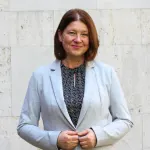 Laposa Laura
Partner · Business & Community Leader · Senior Trainer · Coach · Team coach
 Lőrincz Orsolya
Managing partner · senior consultant
 Máté Beáta
Managing partner · senior trainer · executive coach
 Molnár Judit
Senior consultant · trainer · PCC coach · team coach · Head of the Coaching Division
 Ördög László
Partner · Business Lead · senior consultant · trainer
 Sándor Orsolya
Head of Learning Center · senior trainer · EMCC Senior Practitioner coach