Collaboration Development For teams and across departments
This process is for teams, leadership teams and collaborating organizational units whose joint performance needs to reach a higher level.
CSIP (Continuous Service Improvement Process)
GROW's own methodologyBuilding continuous improvement into everyday operations, not as a project but as a routine.
- We introduce weekly one-hour team meetings
- The meetings are facilitated by an internal CSIP Champion, trained by GROW
- Improvement ideas come from the team, not from the top
- The goal is for an improvement mindset to become part of the culture
The Continuous Service Improvement Process is a continuous improvement mechanism that becomes part of everyday work and makes organizational self-improvement part of the culture. It is based on lean methodology and uses simple, widely applicable tools to make improving processes, services and systems a natural part of employees' working lives. At its core, small teams meet weekly for one hour to work on mini-projects they define themselves, moving implementation forward week by week. The process is cyclical: when one project is finished, the next can begin. The work is facilitated by an internal, elected CSIP Champion, who receives thorough methodological preparation from GROW; GROW supports the rollout and its sustainability with a proven methodology. The mechanism energizes the organization in two ways: the results make work smoother and less stressful, and employees experience that, empowered by their leaders, they can implement improvements themselves.
Related programs: CSIP (Continuous Service Improvement Process) · Collaboration Development for Teams · Organizational Culture Development
Lencioni Model
Licensed / external methodologyA team maturity model that holds up a mirror to how the team actually works.
- Uncovers dysfunctions in how the team works
- Gives the team a shared language for how it operates
- Sets a development direction from trust to a focus on results
The Lencioni methodology examines team effectiveness through the levels of trust, conflict management, commitment and accountability. Patrick Lencioni's team model distinguishes five levels that build on each other: if any one of them is missing, the team does not work well; if all are present, the team is effective. The model comes with a questionnaire that more than 150,000 participants from a wide range of teams have completed since 2004, benchmarked on a sample of nearly 200,000 leaders; every participant receives feedback on where the team stands in terms of trust, conflict, commitment, accountability and results. GROW uses the model as a space for reflection: it gives the team reference points for examining its own functioning and future expectations in a focused, guided way. The process concludes with a detailed, visual report, development tips linked to the focus areas and a presentation for the leader.
Related programs: Focus on Relationship Building · Collaboration Development for Teams
What is the program about?
A consulting process with the team or units, built on the CSIP methodology and the Lencioni team maturity model; the scope depends on the project.
What the organization gets: shared values with clear standards, and common, well-defined goals; clear roles, strong team spirit and mutual trust; effective collaboration within and beyond the team, with active, assertive communication and attentive listening.
Who is the program for?
For teams, leadership teams and collaborating organizational units, as well as the leaders who manage them. It is especially timely when collaboration is faltering within a team or between units.
When is it worth starting?
- the leadership team has no shared understanding of goals and roles
- higher performance is expected from the team, and collaboration needs to change to deliver it.
How we work
We always approach collaboration with a comprehensive methodology: we uncover the challenges and find the team's shared answers to them, with goals aligned to the leaders' expectations. If the situation calls for it, we iterate: the process adapts to the team's pace, not the other way around.
Developing how a team works always addresses the same core problem: the team will need to perform at a higher level than it does today, and that requires better collaboration. When collaboration within a team, in a leadership team or between different departments of an organization gives cause for dissatisfaction, the reasons are usually complex.
We support the work from uncovering operating patterns to developing shared answers.
Our principles
In collaboration development, too, we follow our general development value: customized solutions tailored to the specific situation. To this end:
- we uncover current operating patterns
- we start from the leaders' goals and expectations
- we respond flexibly to the current situation and replan if needed
- we treat team members as partners.
Methodological background
In our programs we apply the CSIP methodology and the Lencioni team maturity model. As Lencioni puts it: “Ideal team players have three essential virtues: humility, hunger and people smarts.” (Patrick Lencioni: The Ideal Team Player, 2016) We tailor the scope and scheduling of the process to the team's situation.
It is also worth starting if:
- a lack of trust and shared norms is slowing down joint work.
Additional outcomes:
- improved team performance: the team becomes able to meet expectations.

Who will you work with?
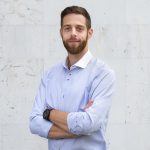 Verdes Tamás
Operations team lead · Senior organizational development consultant · trainer
 Lőrincz Orsolya
Managing partner · senior consultant
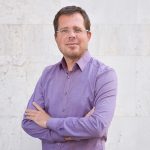 Ördög László
Partner · Business Lead · senior consultant · trainer
 Salamon Dorottya
Organizational development consultant · trainer · mediator
 Meretei Barbara
Senior consultant · trainer · coach
 Halmai Krisztina
Senior trainer · consultant · coach
 Dányi-Nagy Márió
Senior trainer · coach